


In our last survey, we tried to learn what a designer career’s beginnings could look like, why people become designers, and how this motivation changes during the career. We received a lot of amazing stories, and we can’t wait to share them with you and the rest of the community.
What is waiting for you in this newsletter:
🍿 A report from our survey
🛠️ Tool of the week
Ready? Let’s begin!
Last year, this report got our attention. Matej Latin identified what are the most common reasons to quit a design job. The top two are not having a chance to make career progress (18.5%) and not being happy about the work (18.5%). The other prevalent reasons are the low UX maturity of the organization (11.5%) and the poor company culture (13.8%). People also leave because of the management (6.9%) or the lack of respect they receive as designers (4.6%).
This report, however, made us wonder about a very different part of a designer’s career – its beginnings.
How and why do people become designers? What motivates them to start, and how does this motivation evolve over the years?
Our stories are very similar. Both of us got an interest in design pretty early, having a need to build a website for a group of friends with whom we played online games. It was over fifteen years ago, and we went through quite long, sometimes bumpy roads. Our motivations evolved over time. Today, it’s about something different. We have matured as designers and have different needs as well as different drivers to love our job.
We were curious – how common are our stories? How did other designers become what they are today?
The simplest way to find out is to ask, and we did in the survey last month. In this article, we will share our findings. Besides a single question about years of experience, our survey was purely qualitative. We wanted to hear the stories rather than look for numbers. And we received crazy ones!
Key takeaways:
Some careers are molded very early
UX Design is a popular choice to switch a career to
Problem-solving is the main driver to stay in the design industry
Designers love the freedom of working from anywhere
Motivation evolves over time.
Some careers are molded very early
Making websites for fun as a teenager can be a strong trigger to ending up as a UX Designer in adult life. We both went this way. Many of our respondents proved we were not the only ones. It gives the first experience of putting your work in front of real users and even sometimes hearing back. As reacting to feedback at a young age could be difficult and heartbreaking, collecting it for the first time is always a very valuable lesson.
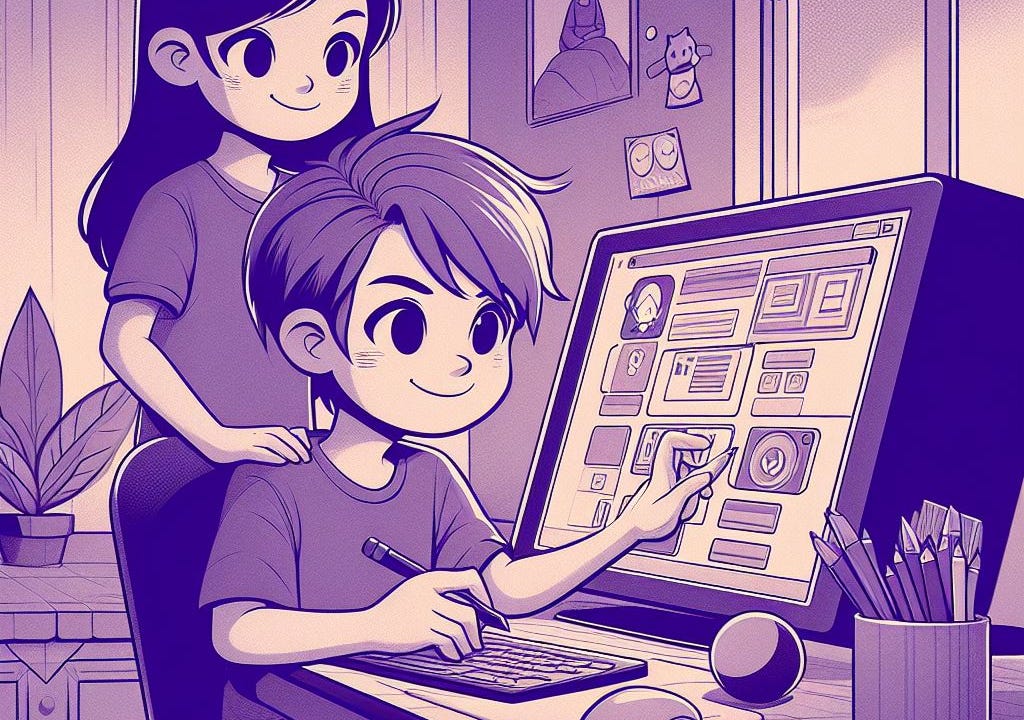
We both started our journeys in our teenage years and up until today, we thought it was pretty special to start so early. But we were so wrong. Let’s look at a story from a designer who did his first interaction design at the age of six. Most likely, it wasn’t intentional, but this definitely contributed to pursuing a career as a designer.
I remember when I was 6-7 years old, I was playing with PowerPoint and essentially making interaction design (obviously, I didn’t know what interaction design was back then). I shared it with my family and asked them to play around with it. I got so much satisfaction from seeing them delighted with what they just experienced.
Ever heard of Geocities? We neither, but using it for the first time must have been a turning point for this designer, who was only 10 years old when he discovered the platform and built his first website on it.
I made Geocities sites when I was 10 and never looked back. Bought my first domain at 15, coded it from scratch, and figured out how to build it scrappily by snooping around the early Internet. Eventually moved to design.
Turns out it’s not only about building websites for fun. Some folks fall in love with beautiful typefaces like Helvetica after watching a documentary at school. It pushes them to study graphic design, and eventually, they switch to UX design in their adult life.
I knew I wanted to become a designer when I saw the Helvetica documentary in my high school class. Something about seeing beautiful typefaces and people geeking out over them made me realize that this is where I belong! (…) I ended up studying graphic design, and the UX field started emerging at that time. (…) I've always had an interest in coding and web design, and I eventually ended up at my current company, first as a marketing designer for their software suite. By this point, I had a really tough time as a graphic designer - I was tired of working contracts dealing with insane people, and tweaking small things in Photoshop all the time. The product design team needed some help on a project, and they brought me in.
But not everyone discovers UX this early and pursues such a career from an early age. For some, it’s a choice they make later in their adult life when they decide to switch from doing something else.
UX Design is a popular choice to switch a career to
Choosing a perfect career and sticking to it for the whole adult life is extremely difficult. Especially after the COVID-19 pandemic, it should not be surprising that many people want to reinvent their careers. More than 50% of our respondents said they have switched to UX Design from doing something else.
Becoming a UX Designer can be quite easy and natural for people who have been coding or doing graphic design before. For others, especially those without prior experience working in IT or digital, it’s usually a bit harder. But it's still doable.
Let’s take a look at this amazing story of a designer who studied a field that has absolutely nothing in common with IT. Before ending up in UX, he tried to be a Social Media Manager but couldn’t find satisfaction.
My career has been a wild ride, honestly. I studied Hotel Management, where we were taught all about how to make a guest happy by taking care of all the details and making sure everything in their stay went smoothly (…) One of my internships was in a hotel that had the concept of "WOW experiences", where anyone in the hotel had a budget they could spend doing the extra mile to make a guest happier than ever. That caught my attention because I loved to create those experiences.
But I was exhausted from working in hospitality, so I made a shift to Social Media, because I already had some experience. And then, I dealt with the keyboard warriors, and a lot of complaints, and again I found myself going out of my way looking for solutions.
Until I ended up working for a UX design company. And it was awesome because I felt UX design could be my way to be part of the solution, and not just be on the receiving end of all the complaints.
If you think of DJing as a creative job, which by all means it is, you can clearly see why the two following stories ended up in this article. The first designer, before discovering UX, used to be a DJ for almost ten years. He never felt like it was a real job to him, but he was lucky to be pushed in the right direction.
I spent most of my twenties and early thirties as a DJ (…) After my daughter was born, I realized I needed a real job. I'd always been interested in tech sort of stuff, and (…) my mum (who was a psychologist working in senior executive-level business things) suggested I look at this new field called UX.
I did a little research, and the empathic and creative approach to problem-solving really resonated with me, so I did a boot camp at the General Assembly. Five years later, I am a mid-senior Product Designer (…) doing really impactful work and having the best time.
The second story is a mix of DJing and having a need to do design to support the DJ’s job. This one is quite incredible and shows how long and bumpy the road to becoming a UX Designer can be.
I was a club and rave DJ in need of items like cassette/CD inserts and flyers and couldn't afford to pay anyone...so I went DIY. (…) What got me into UX was when I was an undergrad in the mid-90s, and I took an MIS class to fulfill an elective requirement. I learned basic HTML, built a website as a project, and carried on with it after college as a hobby...until an HR person told me I should pursue this as a career.
I never even heard of UX until I was in grad school in the mid to late 00s, but it was just called "Human-Computer Interaction" (HCI). I had kept in graphic and web design but eventually had to take on some level of UX in my previous job when they told us we could not use our established UX team for financial reasons. I was laid off from that horrible place in 2019, and upon advice, I decided to go fully into UX.
Problem-solving is the main driver of design
Designers excel at many things: defining problems, talking to stakeholders and users, making beautiful pieces of the user interface, and influencing how people use the Internet. But we are problem solvers first. That’s what we mainly do. We are hired to solve problems in creative ways.
Our respondents would have been very positive about this statement, as most of them mentioned creative problem-solving as the main driver of sticking to this industry. The ability to not work on the same two projects is very important to designers. We are not great at repetitive tasks.
When I was researching the field and saw how much I could earn, it made me feel that investing in my education would be worth it (and it was). But I wouldn’t have gone into it unless I thought I’d enjoy my work. What drew me in was the research side of UX, initially (…) But I found that I like actioning on research more than pure research itself. The problem-solving nature of UX. Knowing I’m making an impact drives me.
My motivation to become a designer initially was a desire to change the tools I use on the Internet and help people less experienced (older or disabled) use them.
I find problem-solving to be very satisfying. I also enjoy the idea of making things easier to use and making peoples’ lives better. Cheesy, I know!
There are a lot of sub-disciplines to get better at, and no two projects are the same, so it stays interesting. The intersection of tech, psych, and semi-creative which is fun. If you are good at collaborating, people really like you because you’re trying to make things better.
This is what I get out of my work: it gives me a good balance of working alone and with others (…) The biggest thing, and the reason I got into it, is that I love solving problems and creating elegant solutions.
Making an impact by creating better experiences for people is also what makes us stay. It’s driving when we know that the solution we thoughtfully designed may make somebody’s life easier.
Designers love the freedom of working from anywhere
This is probably the most positive consequence of the COVID-19 pandemic. Organizations have changed the way they treat remote employees. It’s no longer a privilege. We don’t have to put our Work From Home into the company’s calendar weeks before and ask for permission first.
What motivates me is freedom, no sitting in the office, and doing what I love.
UX Designer’s job pays for the lifestyle. Freedom, fun work, traveling, remote work possibilities. And building usable products is just satisfying!
I’m very blessed to be able to get paid to do something I actually enjoy. Many don’t get that privilege.
It’s an interesting career path, with good salary, and possibility to work from anywhere.
Today, we rarely commute to the office and have the freedom to work from home or anywhere else as much as we want (sometimes, we are just limited by regulations). It applies not only to design but the entire IT industry. We can work from anywhere, in the hours of our choice, as long as our job is done well.
Motivation evolves over time
The last question in our survey was about the motivation at the beginning of a designer’s career versus now. We were pretty sure that for more experienced designers, it must have changed at least a little over the years.
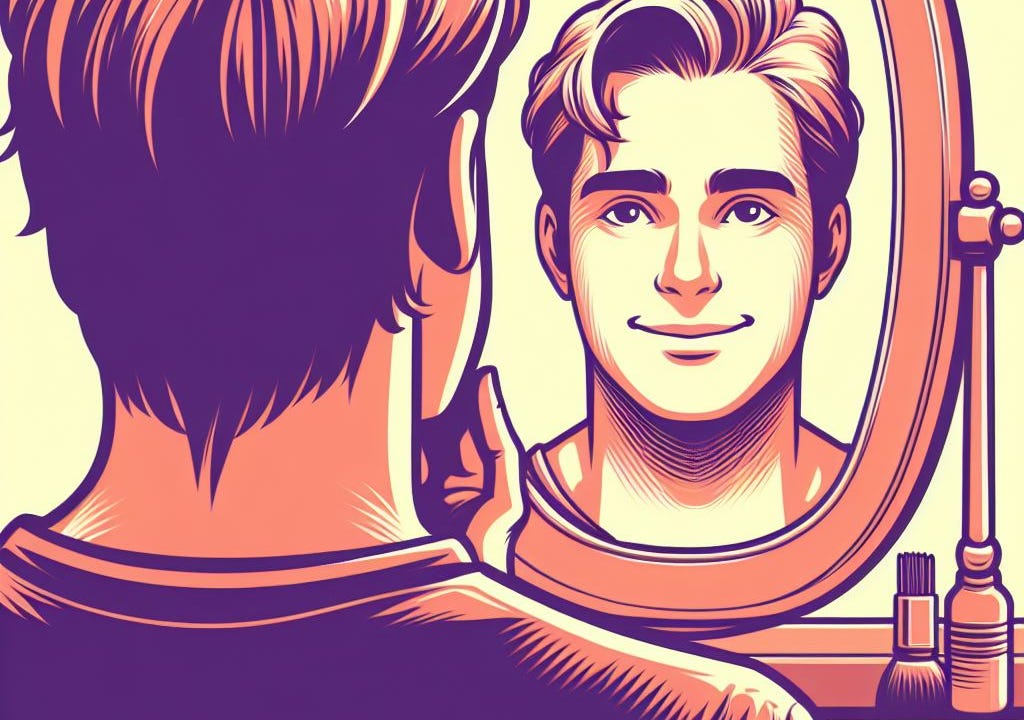
But after stopping for a moment to look at ourselves and see how we matured as designers, we can clearly say it is an evolution. It is not like totally different things drive us now. We still love the impact we are making. We are still getting satisfaction from a well-solved complex problem with a nicely crafted, beautiful piece of a user interface.
It’s more people-centered and less my own needs-centered. I truly believe in making the world a better place for the users. And it’s still fun!
It kind of remains the same; maybe I don’t feel like I will change the world anymore.
It’s different nowadays because I work for the benefit of society doing state digitization. At a time when I could rely on increasing customer sales and pushing bullshit on users based on the psychology and behavior of users, I was going through a huge burnout.
It evolved a bit, but the major motivation (making the Internet a bit better) is still valid.
Nothing changed.
What really evolves is the feeling of having the power to change the world. Depending on the current assignment, this can be up or down – some products actually change the world, and some are simply money-making machines. So be wise when signing another contract and consider what kind of business you want to contribute to.
Image attribution
In this article, we used images generated by artificial intelligence – Microsoft’s Bing Designer.
Further reading
The State of UX in 2024 – Enter Late-Stage UX by Fabricio Teixeira and Caio Braga
How much do UX Designers make? 2023 Guide by Gala Naseva and Jordan Hughes
Why designers quit by Matej Latin
What makes me a designer by Tobias van Schneider
Tool of the week
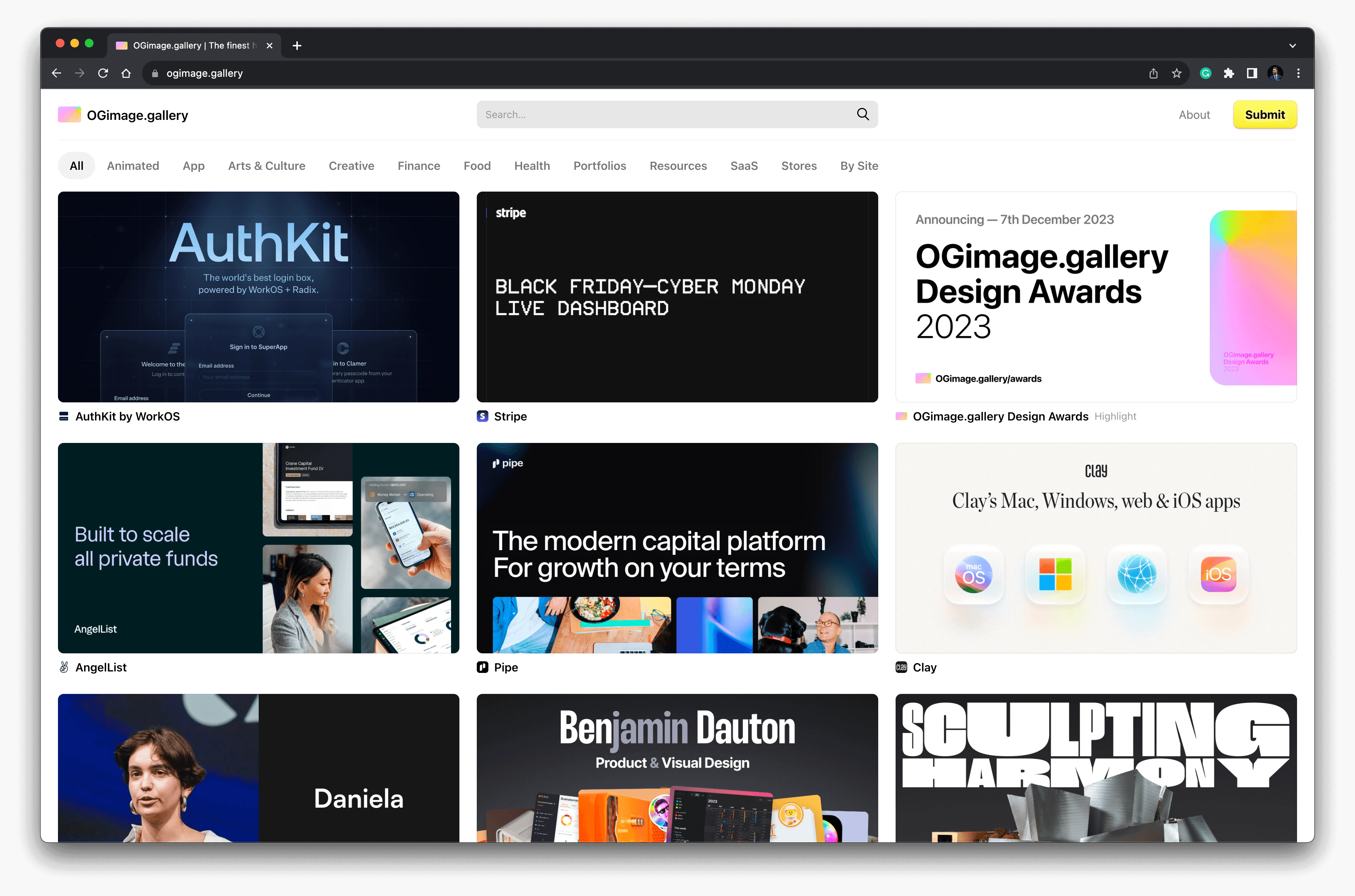
OGimage.gallery
This website is a collection of the most beautiful OG images you can find over the Internet. If you don’t know, OG images are the thumbnails you see on social media like Linkedin or X and messaging apps like Slack or iMessage almost every time you paste a link to a website. A very useful resource of inspiration if you are building your own website at the moment.
Dear fellow designers!
Don’t let the tumultuous times drive you away from your dream career as a designer.
The future is bright, my friends.
To thrive in it, you need to learn to transform and adapt.
The best part is that, as a designer, you have all the skills and natural talents to do it.
You are uniquely positioned to bring change in the world through your creations, and most importantly to bring a change in yourself. Follow your design soul, it won't let you get lost.