

Welcome to Fundament, a weekly product design newsletter where we share actionable tips and insightful stories with the worldwide design community. Join 2,600+ readers and grow as a UX and product designer with us!
Increase your value with systems thinking
One of the key qualities of a good designer and a quality that can make you one is the ability to look beyond the narrow scope of the task you have been assigned and take into account all the other areas connected to it.
Designers at the beginning of their careers, although this also happens to people with more experience, often focus only on what is explicitly defined in the project scope. Designing a new form or a sign in flow? A few screens and the job is done. This kind of approach is work done in isolation, and as we know well, product design is definitely not a field where isolation works.
That is why, if you want to accomplish two of the most important goals in our work, identifying the real problem and solving it properly, your work has to be the opposite of isolation. It needs to include the perspectives of many people and teams, their requirements, business models, technological constraints, as well as internal and external dependencies related to what you are designing.
If you often find yourself in situations where it turns out you did not address all the problems or did not consider all the necessary perspectives, you should definitely take a deeper look into system thinking.
What is system thinking
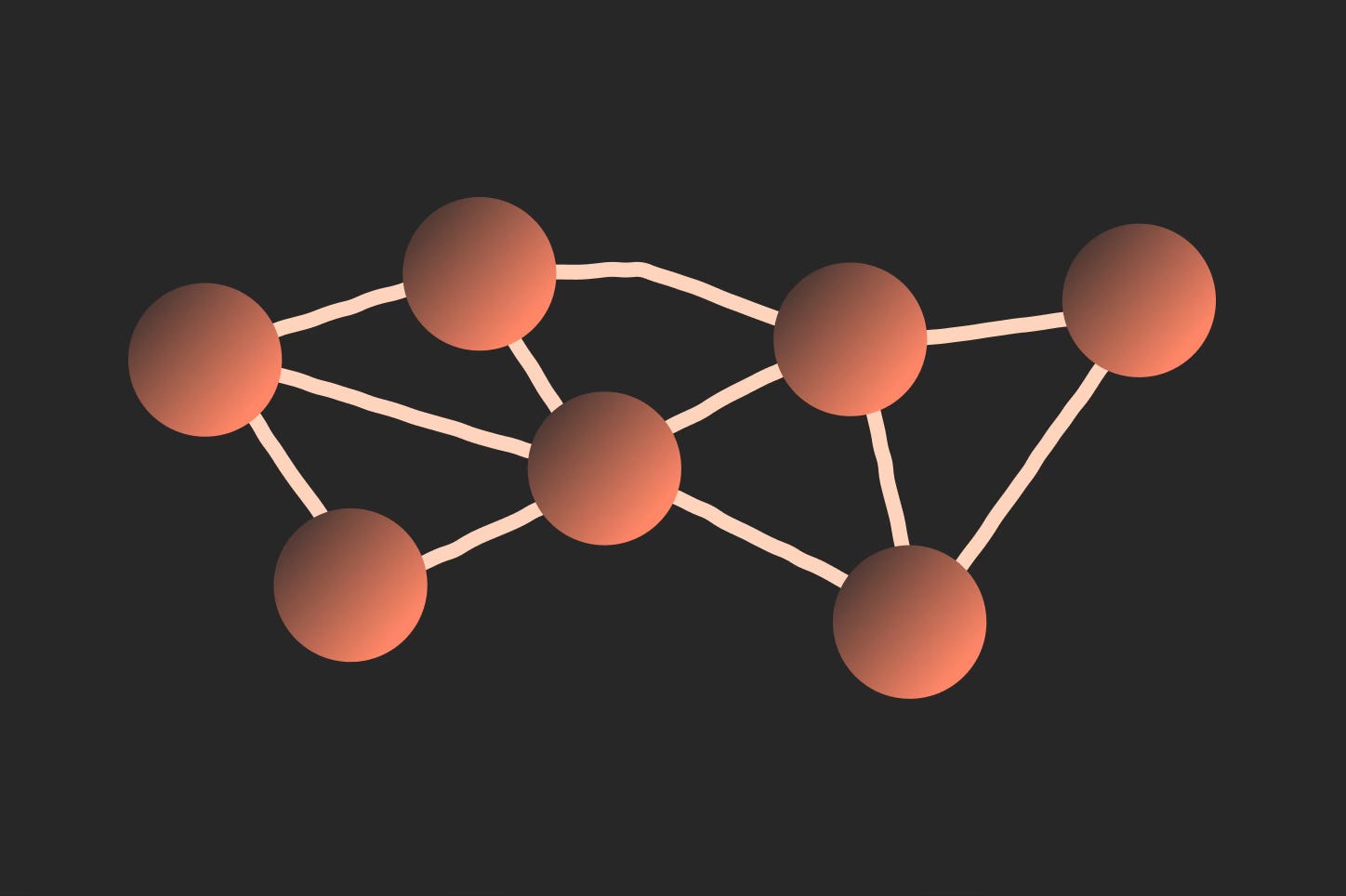
Systems thinking is about viewing a product as a living, complex ecosystem where all elements influence one another.
To make this easier to understand, think of it this way: when you design a login screen, you do not focus only on individual screens. You think about the entire system. You consider how users create an account, log in across different devices, reset their password, switch between accounts, how accounts are managed from the organization’s perspective, which terms need to be accepted, what data users must provide, and whether a single step or a multi step form works better, and so on.
System thinking in product design
The concept of systems thinking appears across many different fields and at various levels of complexity. I would like to look at systems thinking from the perspective of building digital products. For me, it shows up in two key areas of product creation and development.
The first is identifying the real problem to solve, meaning making sure that we are addressing the right problem, which may exist much deeper within the system.
The second is preparing the solution itself, meaning taking into account all the necessary perspectives required to deliver a solution that meets the needs of the business, technology, users, and other teams within the company.
These are two extremely important areas that need to be addressed in sequence. At the very beginning, the highest priority should be placed on identifying the real problem to solve, because even the best solution has little value if it addresses the wrong problem. In that case, it becomes nothing more than patching symptoms. Only once we understand the real problem can we move on to designing a solution.
I would also like to point out that not every task we work on will require systems thinking. Very often, we will need to add or modify something that is not particularly complex, does not have deeper layers, or simply does not allow room for this kind of approach. This is natural and unavoidable in the world of digital product design.
Elements of systems thinking
To successfully apply systems thinking in your work, you need to focus on several elements that are crucial to this process.
Identifying the real problem
When working on a new solution or improving an existing one, it is essential to understand which problem you should actually be solving. As a designer, you should never take the problem handed to you by a PM at face value and should always make sure that the right problem is being addressed.
As mentioned earlier, a product is a system in which everything is connected. This means that poor click through on a purchase button does not always result from low visibility. The cause might be an inappropriate pricing strategy, unclear communication of the product value, lack of trust in the store such as missing reviews or weak product photos, an unclear delivery process, or hidden costs revealed only in the cart. Instead of solving the real problem, we often treat only its symptoms.
One of the better methods for getting to the root of the problem is the five why technique. Below is an example of a problem analysis related to search.
Why do you need faster search? Because I look for the same thing five times a day.
Why do you look for the same thing? Because there is no way to save it.
Why do you not save it? Because bookmarks get lost and I have too many of them.
Why do you have so many bookmarks? Because I use them as a to do list since the product does not have such a feature.
As you can see, the problem lies somewhere completely different. To notice it, you need to think systemically and go beyond the narrow area of the originally defined problem. If you simply improved the search, the user would still look for the same thing five times a day, only a bit faster, and their frustration would remain unchanged.
It can also be crucial to gather perspectives from other teams in the company, as they may have important information about the problem you are identifying. The real problem may exist in different parts of the system, the process, or the way various teams operate.
Thanks to systems thinking, you can understand where the problem originated within the system and what sustains it. Symptoms often appear in the most visible places, while the real cause lies deeper in the process architecture, company policies, technological constraints, or user behaviors.
Of course, it will not always be the case that the initial problem turns out to be the wrong one. Sometimes the purchase button truly is poorly visible. What matters is consciously validating the problem and not assuming from the start that it is definitely the right one.
Looking beyond a single screen or a single feature
I would start by saying that we should not focus solely on a narrow area that we are addressing at a given moment. When adding a new feature, flow, screen, or button, we should consider how this change affects the entire product, look at different usage contexts, existing solutions, the impact on users, and what surrounds it. A perfectly designed button in a poorly designed process is useless.
Understanding the relationship between users, business, and technology
As a product designer, you cannot focus only on user benefits. You must also consider technological constraints and organizational goals. Your solution has to be feasible within the current technology, the planned timeline, available resources, and budget, while also supporting company goals, which are often at odds with user goals. Thinking systemically means preparing a solution that balances these three areas as well as possible.
Recognizing patterns
A designer who thinks systemically can spot recurring problems and designs solutions that can scale instead of creating one off fixes. A perfect example is design system components. When solving a problem, you ask yourself whether an existing component can be used, and if a new one is needed, you analyze what other problems it could address with smaller or larger functional extensions.
Including perspectives from different roles
As mentioned earlier, systems thinking requires considering business needs, user needs, and available technology. However, these are not the only areas you need to keep in mind. A system is much more than that, and very often you will also need to consider guidelines from marketing, developers, feedback from customer support, or recommendations from legal and security teams. Ignoring these aspects early on leads to incomplete solutions that will sooner or later have to accommodate these needs, exposing the organization to additional costs. This was the case in my last project, where legal regulations were one of the most important constraints. Failing to meet them could have caused serious problems for the company.
Thinking about the product as an ecosystem with multiple participants
When designing solutions, you need to consider much more than just the end user. In addition to internal teams, you also need to understand what happens around the solution and its seemingly minor participants. For example, when designing an order system for users, it is valuable to understand how the process looks from the perspective of the warehouse, logistics, and customer support.
Designing consequences consciously
Everything we introduce into a system leads to consequences. Sometimes they are positive, sometimes negative, sometimes short term, sometimes long term. When thinking systemically, you should consider how a change will affect the current state of the system.
For example, heavily simplifying adding items to the cart and completing purchases may increase sales, but it can also lead to a higher return rate because users buy impulsively without much consideration. This can generate higher costs for the company than the value gained from increased sales volume.
Relationships and dependencies
You need to understand the relationships and dependencies between elements of the system. For example, adding comments to a website can be a useful feature because it increases the authority of presented products or services. However, it also requires expanding or creating a notification system, making decisions about login and registration, comment moderation, privacy policy updates, and additional technical costs.
The same applies to introducing dark mode. Systems thinking involves analyzing contrast, impact on branding, user behavior in different conditions, component support for dark mode, and consistency with other products in the ecosystem. Similarly, when designing registration and login, you must consider security, databases, and customer support. Every new feature or solution must be integrated into the entire system rather than existing alongside it.
Feedback loops
Systems thinking also involves anticipating how changes will affect the system over time. These changes can be intended or unintended. There are two types of loops, reinforcing and balancing.
Reinforcing loops amplify a given phenomenon, both in positive and negative directions.
Positive reinforcement example. Good reviews increase trust, higher trust increases purchases, more purchases generate even more reviews, and the system reinforces itself.
Negative reinforcement example. Introducing comments increases engagement but also attracts users seeking conflict. Over time, comments become more toxic, which may drive away other users.
Balancing loops stabilize the system and prevent extremes. For example:
Discounts attract more customers, but a higher number of customers reduces margins, forcing the company to limit discounts and return to equilibrium.
Users start using a new feature intensively, server response times increase, satisfaction drops slightly, and traffic decreases. The system returns to a level that is technologically stable.
System thinking increases your competences
As I mentioned earlier, the ability to take a holistic approach to design is a trait of every good designer. It helps you recognize that a product is always part of a larger and more complex system that includes social, environmental, and technical contexts. This understanding makes it easier to deal with the inherent complexity of design challenges.
As a result, the quality of your work is significantly higher because your solutions are truly aligned with the system rather than detached from it. It also allows you to deliver projects more efficiently, as it reduces the risk of overlooking important perspectives that can have a major impact on the outcome, such as legal or technological constraints. It also supports more accurate identification of the real problems to solve, which has a direct and meaningful influence on product quality.
Systems thinking is also the ability to ask the right questions at the right moment. It is definitely not a single checklist to complete in every project, but rather an understanding of what to ask in a given context. What needed to be considered in project A does not necessarily apply to project B.
If you want your work to be about more than just designing wireframes based on a provided specification, systems thinking is a skill you should absolutely develop further.
Support our work
If you enjoy our newsletter, consider switching to the Premium plan to show your support! For just $5 a month (or $45 a year), you will get full access to our archives and free access to ebooks from Fundament Library.
Partnerships and socials
Partner with us via Passionfroot
Mateusz’s LinkedIn
I appreciate you sharing this! I find the white text on a black background a little hard on my eyes.